Makar Sankranti 2027: Friday 15 January
October 31, 2026
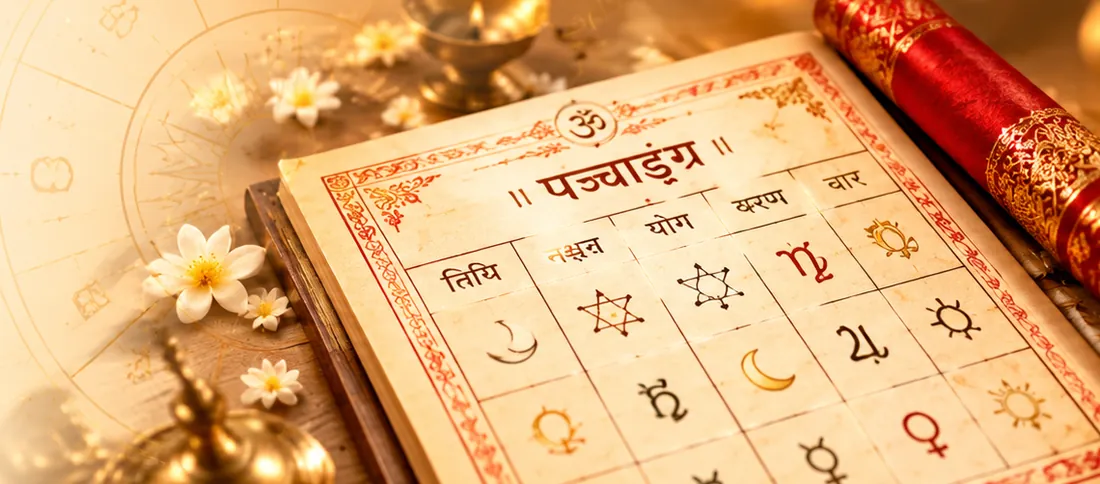
Makar Sankranti is one of the few Hindu festivals set by the Sun rather than the Moon. It marks the moment the Sun enters the sidereal sign of Capricorn (Makara), and so it falls in mid-January nearly every year. In 2027 the Sun crosses into Capricorn at 21:10 IST on Thursday 14 January 2027. That is after sunset in New Delhi, so the festival day is Friday 15 January 2027.
This article explains how the day is chosen, gives the timings the site's panchang works out for New Delhi, and adds a short note for each Moon sign on the solar month that begins.
The moment and the day
A sankranti is the instant the Sun passes from one sidereal sign into the next. The site's ephemeris (sidereal zodiac, Lahiri ayanamsa, the same engine that draws its charts) puts the Sun's entry into Capricorn at 21:10 IST on 14 January 2027. Drik Panchang prints 09:14 PM, four minutes later; almanacs differ by a few minutes on the Sun's crossing, and the day is the same.
On 14 January the Sun sets in New Delhi at 17:44 IST, so the crossing comes well into the night. When a sankranti falls after sunset, the almanacs keep its holy period, the punya kala, on the following day, and that is why the festival is observed on Friday the 15th. The rule for moving the observance is the almanacs' rather than something the site's own tables decide, so we follow Drik Panchang here, which names Friday 15 January and gives a Punya Kala from 07:15 AM to 05:46 PM for New Delhi.
On 15 January the Sun rises at 07:14 IST and sets at 17:45 IST. The tithi at sunrise is Shukla Saptami, which runs until 14:14 IST, and the Moon is in Revati nakshatra, in Pisces, all day. The lunar month is Pausha in both reckonings. You can check these for your own city on the panchang page: sunrise and sunset change with the place, the sankranti moment does not.
Uttarayana, two ways
Makar Sankranti is often called the start of Uttarayana, the Sun's northward course. The site's panchang shows the ayana in two ways, and this festival is where they part.
Reckoned by the seasons, as Drik Panchang does, Uttarayana begins at the December solstice, when the days stop shortening; on the site's panchang the Drik column already reads Uttarayana in early January. Reckoned by the sidereal signs, as the older Vedic usage does, Uttarayana begins when the Sun enters Capricorn. On 14 January 2027 the site's panchang still shows the Vedic ayana as Dakshinayana; on the 15th it shows Uttarayana. The festival keeps the sidereal reckoning, which is why it falls about three weeks after the solstice and drifts slowly later over the centuries.
The Sun in Capricorn
Capricorn is ruled by Saturn, whom the site's table of natural friendships counts as one of the Sun's enemies, so the Sun stands in an enemy's sign for this month. It is neither exalted nor fallen there. The Sun stays in Capricorn until 13 February 2027 at 10:09 IST, when it moves on into Aquarius.
The sky around it is busy. Rahu is also in Capricorn, having entered the sign on 5 December 2026, so the Sun travels towards it through the month. Jupiter and Mars are both retrograde in Leo, and Saturn is in Pisces. For a person born with the Sun in Capricorn, Varahamihira gives a hard reading of modest means and humble work (Brihat Jataka 18.3, tr. N. Chidambaram Iyer). That is a reading of a birth chart, not of the festival, and it is quoted only to show how the tradition regards this placing of the Sun.
How the day is kept
The festival is kept across India under many names. In Punjab the evening before is Lohri, in Tamil Nadu the harvest festival of Pongal runs over these days, in Gujarat it is Uttarayan with its kites, and in Assam it is Magh Bihu. Common to most is a bath at dawn, often in a river, gifts of sesame and jaggery, and charity.
The site's reference lists the Sun's own observances as offering water to the Sun at sunrise, facing east, and giving wheat, jaggery or copper. Its mantra is "Om Suryaya Namah", and the Aditya Hridayam is the stotra the reference names for it. Sesame belongs in the reference to Saturn, among whose customary gifts black sesame is listed: on the day the Sun enters Saturn's sign, the two gifts together make the familiar til-gud.
Your Moon sign
Count from the sign the Moon was in at your birth, your own sign being the 1st; a free birth chart tells you which it is. Two things are noted for each sign. The Sun's house is for the solar month that begins, which runs to 13 February; the classical gochara table the site uses counts the 3rd, 6th, 10th and 11th as good for the Sun. The Moon's house is for the morning of the festival, at sunrise on 15 January: Chandrabala, the Moon's support, holds when the Moon is in the 1st, 3rd, 6th, 7th, 10th or 11th from your Moon sign. Where it does not, nothing is forbidden; the festival belongs to everyone.
Aries Moon (Mesha). The Sun is in your 10th house this month, a favourable house for the Sun; on the festival morning the Moon is in your 12th, and Chandrabala does not hold. Work and standing are supported, and a quiet start to the day suits you.
Taurus Moon (Vrishabha). The Sun is in your 9th house, not one of the Sun's favourable houses; the Moon is in your 11th, so Chandrabala holds. Honour teachers and elders, and enjoy the company of friends on the day.
Gemini Moon (Mithuna). The Sun is in your 8th house, not one of the Sun's favourable houses; the Moon is in your 10th, so Chandrabala holds. Keep the month steady and avoid strain, though the festival day itself is well supported.
Cancer Moon (Karka). The Sun is in your 7th house, not one of the Sun's favourable houses; the Moon is in your 9th, and Chandrabala does not hold. Partnerships want patience this month; a pilgrimage or temple visit suits the day.
Leo Moon (Simha). The Sun is in your 6th house, a favourable house for the Sun; the Moon is in your 8th, and Chandrabala does not hold. A good month to clear obstacles and settle debts, with a simple, careful observance.
Virgo Moon (Kanya). The Sun is in your 5th house, not one of the Sun's favourable houses; the Moon is in your 7th, so Chandrabala holds. Children and study ask for attention, and the day is good for time with your partner.
Libra Moon (Tula). The Sun is in your 4th house, not one of the Sun's favourable houses; the Moon is in your 6th, so Chandrabala holds. Home and family come first this month; the festival morning is well supported.
Scorpio Moon (Vrishchika). The Sun is in your 3rd house, a favourable house for the Sun; the Moon is in your 5th, and Chandrabala does not hold. Effort and initiative are rewarded this month; keep the day devotional.
Sagittarius Moon (Dhanu). The Sun is in your 2nd house, not one of the Sun's favourable houses; the Moon is in your 4th, and Chandrabala does not hold. Mind your speech and spending, and keep the festival close to home.
Capricorn Moon (Makara). The Sun is in your 1st house, not one of the Sun's favourable houses; the Moon is in your 3rd, so Chandrabala holds. The Sun over your own sign asks for rest and care of health, and the day itself is well supported.
Aquarius Moon (Kumbha). The Sun is in your 12th house, not one of the Sun's favourable houses; the Moon is in your 2nd, and Chandrabala does not hold. A month for charity and quiet; giving on the festival day is the heart of it.
Pisces Moon (Meena). The Sun is in your 11th house, a favourable house for the Sun; the Moon is in your 1st, so Chandrabala holds. Gains and friendships are supported, and the festival day is a good one for you.
Use the tools
- Sunrise, sunset, tithi and nakshatra for your own city: panchang. Background on the five limbs of the day is in the Panchang Guide.
- Your horoscope for January, read from your Moon sign.
- A good day for a new beginning after the festival: the muhurta finder.
General guidance for a Moon sign, not a personal reading. Timings are for New Delhi; check your own city on the panchang page.